Journaling your way out of tilt: a psychology checklist
Tilt is the quiet account-killer: revenge trades, oversizing, chasing. You cannot think your way out of it in the moment, but you can build a journal that catches it early.
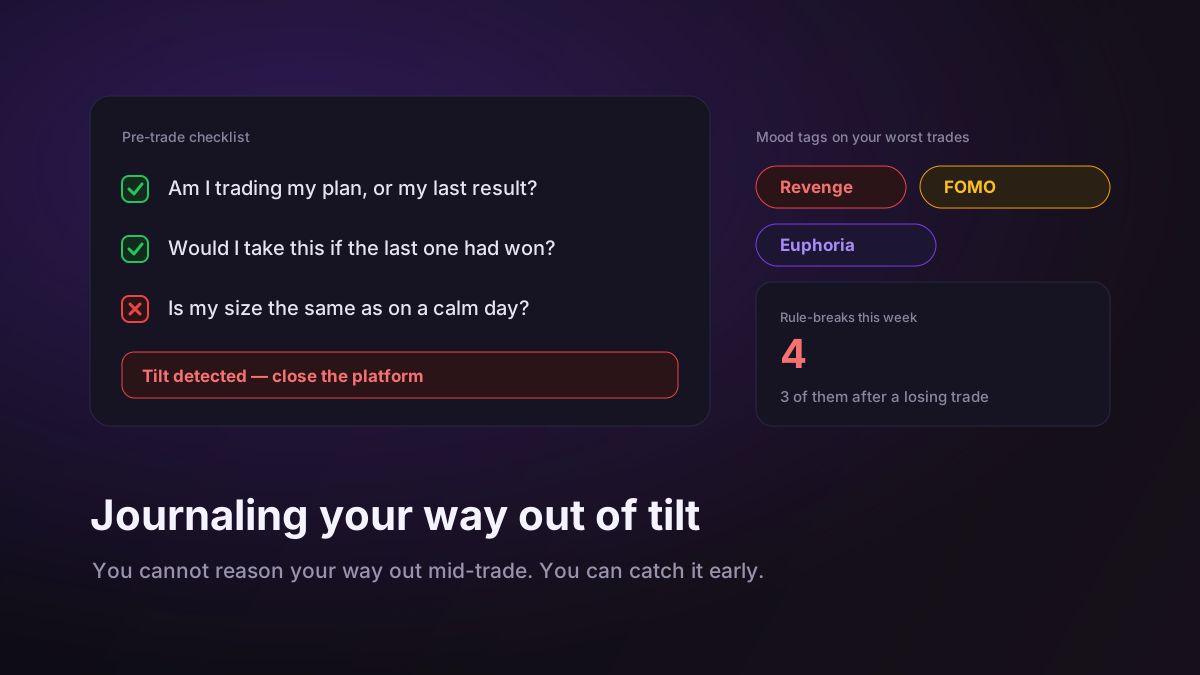
Tilt does not announce itself. It arrives as a small, reasonable-sounding thought — "I'll just make that back" — and by the time you notice, you have doubled size on a setup you would normally skip. You cannot reliably reason your way out of tilt while you are in it, because the part of your brain making decisions is the part that is compromised. What you can do is build a journal that catches it early and a checklist that runs on autopilot.
Name the states that precede your worst trades
Go back through your journal and pull your five worst trades. Not the biggest losers — the ones where you broke your own rules. Read what you wrote before and after each. A pattern will emerge: a specific emotional state that shows up right before you self-destruct. For most traders it is one of a few:
- Revenge — trading to get back at the market after a loss.
- FOMO — chasing a move you missed because sitting out feels unbearable.
- Euphoria — oversizing after a big win because you feel invincible.
Tag every trade with the emotion you felt at entry. Once you have a few weeks of data, your tilt triggers stop being vague feelings and become named, trackable states.
Build a pre-trade checklist that includes your head
Most checklists cover the setup. Add three questions that cover you:
- Am I trading my plan, or trading my last result?
- Would I take this exact trade if the previous one had won?
- Is my size the same as it would be on a calm day?
If any answer is no, you are not looking at a trade. You are looking at tilt wearing a trade's clothing. Close the platform.
Make the stop-rule non-negotiable
The most valuable line in your journal is the one that says when you are done for the day. A hard stop — after a fixed loss, or after two rule-breaks — removes the decision from your compromised in-the-moment self and hands it to the calm version of you who wrote the rule. Honor it even when you are "sure" the next one is a winner. Especially then.
Review tilt like a trade
When you do tilt — and you will — do not bury it in shame. Journal it like any other event. What was the trigger? What did you feel? What was the first rule you broke, and what would have interrupted the spiral? Over time this turns your worst moments into your best data. The traders who beat tilt are not the ones who never feel it. They are the ones who have studied their own so thoroughly that they see it coming.